News & Insights
Stay informed with the latest breakthroughs, partnerships, and thought leadership from the chemists leading the future of sustainable materials, pharmaceuticals, and advanced manufacturing.
DL-Leucine: What It Is and How It Is Used in Research
Key Takeaways
- DL-Leucine (CAS Number: 328-39-2) is a racemic mixture containing both D-Leucine and L-Leucine.
- It has the molecular formula C₆H₁₃NO₂ and a molecular weight of approximately 131.17 g/mol.
- Researchers may use DL-Leucine in chiral analysis, amino acid testing, peptide chemistry, and analytical method development.
- D-Leucine and L-Leucine can behave differently in biological and synthetic applications, so identifying the individual enantiomers may be important.
- A product labeled 98% purity does not automatically mean that it contains 98% L-Leucine. Chemical purity and enantiomeric purity are different measurements.
- When purchasing DL-Leucine, check the CAS number, purity, product documentation, and suitability for the intended application.
What Is DL-Leucine?
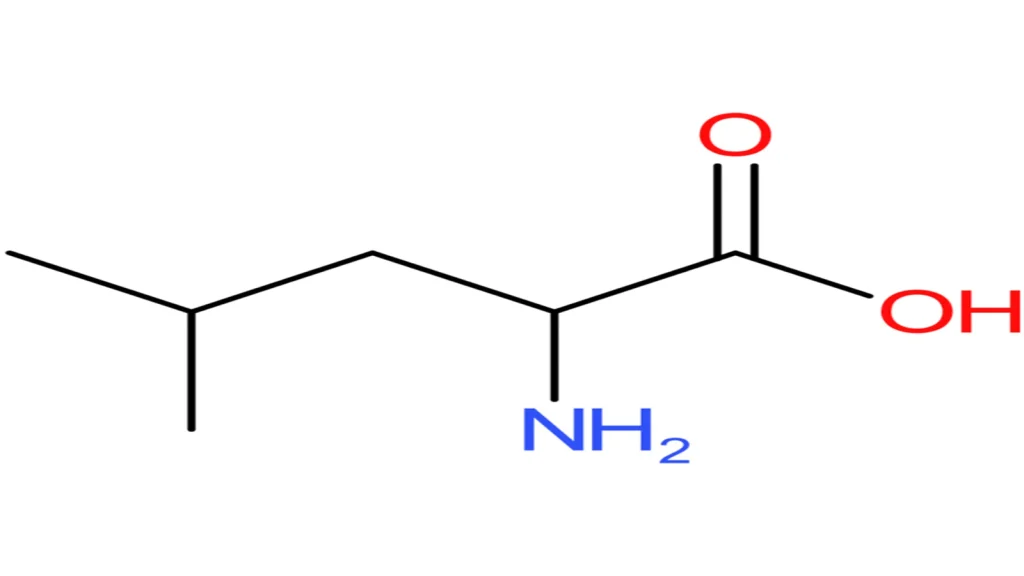
DL-Leucine is a mixture of the two mirror-image forms of leucine: D-Leucine and L-Leucine. Because these two forms have the same atoms connected in the same order but differ in their three-dimensional arrangement, they are called enantiomers.
The compound is also known as (±)-Leucine or racemic leucine. Its CAS Number is 328-39-2, with the molecular formula C₆H₁₃NO₂ and a molecular weight of about 131.17 g/mol.
Understanding the “DL” in DL-Leucine
The D and L labels describe the three-dimensional arrangement of the molecule. They do not mean that one form has a different molecular formula from the other.
L-Leucine is the naturally occurring proteinogenic form that is incorporated into proteins. D-Leucine is its enantiomer and is found in some biological contexts, including microbial systems.
DL-Leucine contains both forms. That makes it useful when a researcher needs a racemic sample for comparison, method development, or a study of enantiomer separation.
DL-Leucine vs. L-Leucine vs. D-Leucine
Although the three materials are closely related, they are not interchangeable in every research application.
| Characteristic | DL-Leucine | L-Leucine | D-Leucine |
| Composition | D + L | L only | D only |
| Stereochemical form | Racemic mixture | Single enantiomer | Single enantiomer |
| Molecular formula | C₆H₁₃NO₂ | C₆H₁₃NO₂ | C₆H₁₃NO₂ |
| Molecular weight | 131.17 g/mol | 131.17 g/mol | 131.17 g/mol |
| Typical research role | Racemic reference or starting material | Protein and peptide research | Chiral research and specific synthetic or biological studies |
The molecular formula and molecular weight alone cannot tell these materials apart. Their difference lies in stereochemistry, which becomes important when the research depends on biological activity, synthesis, or enantiomeric composition.
For researchers, the practical difference is the form required by the experiment. DL-Leucine provides both enantiomers, while L-Leucine or D-Leucine is used when the research calls for a specific form. Choosing the wrong form can affect the interpretation of analytical results or the outcome of a synthesis.
What Is DL-Leucine Used for?
DL-Leucine is used across several areas of chemical and laboratory research. Its applications include amino acid analysis, chiral research, peptide chemistry, analytical method development, and related synthetic work.
The specific application determines whether researchers need DL-Leucine as a racemic material, as a reference for analytical work, or as part of a broader synthetic research process.
Chiral Analysis and Separation Research
DL-Leucine is used in research that studies how D-Leucine and L-Leucine can be identified, measured, or separated.
Amino Acid Analysis and Measurement
DL-Leucine can be used in analytical work involving amino acid composition and leucine measurement. It may be relevant when researchers need to determine the amount of leucine in a sample or develop a method for analyzing amino acids.
Peptide Synthesis and Chemical Research
Leucine is an important building block in peptide and synthetic chemistry. Researchers may work with L-Leucine, D-Leucine, or DL-Leucine depending on the required molecular structure and the purpose of the study.
Research and Method Development
DL-Leucine can also be used during analytical method development, reference testing, and other laboratory studies where a defined leucine material is required.
Why Is D- and L-Leucine Separation Important?
D- and L-Leucine separation matters when researchers need to know which form of leucine is present and in what proportion.
For some applications, measuring total leucine is enough. However, that result cannot show whether the sample contains only the required enantiomer or a mixture of both forms. This becomes important in peptide synthesis, chiral analysis, and research where the biological or chemical behavior of a specific enantiomer matters.
For this reason, researchers may need to determine the D/L ratio, check the purity of a specific enantiomer, or confirm whether an unwanted enantiomer is present.
How Are D- and L-Leucine Separated or Resolved?
Researchers can separate D- and L-Leucine by introducing a method that makes the two forms behave differently during analysis.
Chiral chromatography uses a specially designed column that interacts differently with the two enantiomers, allowing them to appear as separate peaks.
Another approach is chiral derivatization, in which the two forms are first converted into different compounds and then separated by chromatography.
For larger-scale or process research, researchers may also investigate crystallization-based resolution and other chemical separation methods. The appropriate approach depends on the required purity, scale, sample composition, and available equipment.
How Do You Choose DL-Leucine for Research?
Confirm Product Identity and Purity
Begin with the basic identifiers.
For DL-Leucine, the CAS Number is 328-39-2, while the molecular formula is C₆H₁₃NO₂. These details should match the supplier’s product documentation.
Then check the stated purity. A product listed as 98% purity should be understood according to the supplier’s specified test method. It does not automatically describe the D/L ratio.
Check Specifications and Documentation
The required documentation depends on how the material will be used.
For routine research, researchers may mainly need the product identity and purity information. For quantitative analysis or method development, a Certificate of Analysis (CoA) and batch-specific testing can be more important.
Useful information may include:
- CAS Number and product identity
- Purity or assay
- Batch or lot number
- Test method
- Storage conditions
- Relevant impurity information
- Enantiomeric or chiral purity data, when required
The more sensitive the application, the more important it becomes to understand exactly what the reported specification represents.
Match the Material to the Intended Research Application
The right material depends on what the experiment needs to measure or produce.
For chiral separation research, DL-Leucine is useful because it provides both enantiomers in one material.
For amino acid analysis, researchers should determine whether total leucine or individual enantiomers need to be measured.
For peptide synthesis, the choice depends on the required stereochemistry. A racemic material may be suitable for some research steps, while an enantiopure L- or D-Leucine may be required for the final synthesis.
DL-Leucine from OUHE
OUHE supplies DL-Leucine as an amino acid building block for laboratory and chemical research.
Verified Product Specifications
| Property | DL-Leucine |
| Product Number | A10094 |
| CAS Number | 328-39-2 |
| MDL Number | MFCD00063087 |
| Purity | 98% |
| Molecular Formula | C₆H₁₃NO₂ |
| Molecular Weight | 131.175 |
| Storage | RT, dry, draught |
Quality Documentation
OUHE states that it follows ISO-certified processes and quality-control procedures and can provide documentation such as CoA, MSDS, and technical specifications upon request. This gives research and procurement teams the information needed to evaluate a material against their internal requirements.
Supply and Technical Support
OUHE supports customers from laboratory-scale research through larger-scale requirements. Its stated services include custom synthesis, process optimization, scale-up, and GMP manufacturing, while its technical team provides application guidance and technical consultation. The company also reports a product catalog of more than 200,000 products and service coverage in 60+ countries.
Global Order Support
For international buyers, OUHE provides support with packaging, documentation, and shipping arrangements. According to its FAQ, in-stock products are usually shipped within a few working days, while custom synthesis projects are evaluated according to the required specifications and technical scope.
Frequently Asked Questions
Why is D- and L-Leucine separation important?
The two enantiomers can have different biological or chemical roles. L-Leucine is a proteinogenic amino acid, while D-Leucine has different behavior in biological systems and can be relevant to specific microbial or chemical research.
Is DL-Leucine soluble in water?
DL-Leucine is reported as soluble in water, but practical solubility can depend on the test conditions. Researchers should refer to the specification for the material and conditions being used.
What is the difference between chemical purity and enantiomeric purity?
Chemical purity indicates how much of the sample meets the specified chemical identity, while enantiomeric purity describes the proportion of one enantiomer relative to the other. Therefore, a 98% purity result does not by itself indicate the D/L ratio of DL-Leucine.
Why is DL-Leucine used in chiral resolution research?
DL-Leucine contains both D- and L-Leucine, making it a useful starting material for studying how one enantiomer can be separated or enriched from the other. It can be used in research on chromatographic, chemical, or crystallization-based resolution methods.
Conclusion
DL-Leucine is the racemic form of leucine, containing both D- and L-Leucine. It is a well-defined material for laboratory research.
Its value in research comes largely from its stereochemistry. Researchers can use DL-Leucine to develop chiral analytical methods, study amino acid composition, support synthetic work, or evaluate separation procedures.
When the application depends on a specific enantiomer, the D/L composition needs to be considered separately from general chemical purity. That distinction helps researchers choose the appropriate material and avoid drawing conclusions from a purity value that does not describe stereochemical composition.Contact OUHE to discuss DL-Leucine requirements, technical documentation, or your specific research needs.