News & Insights
Stay informed with the latest breakthroughs, partnerships, and thought leadership from the chemists leading the future of sustainable materials, pharmaceuticals, and advanced manufacturing.
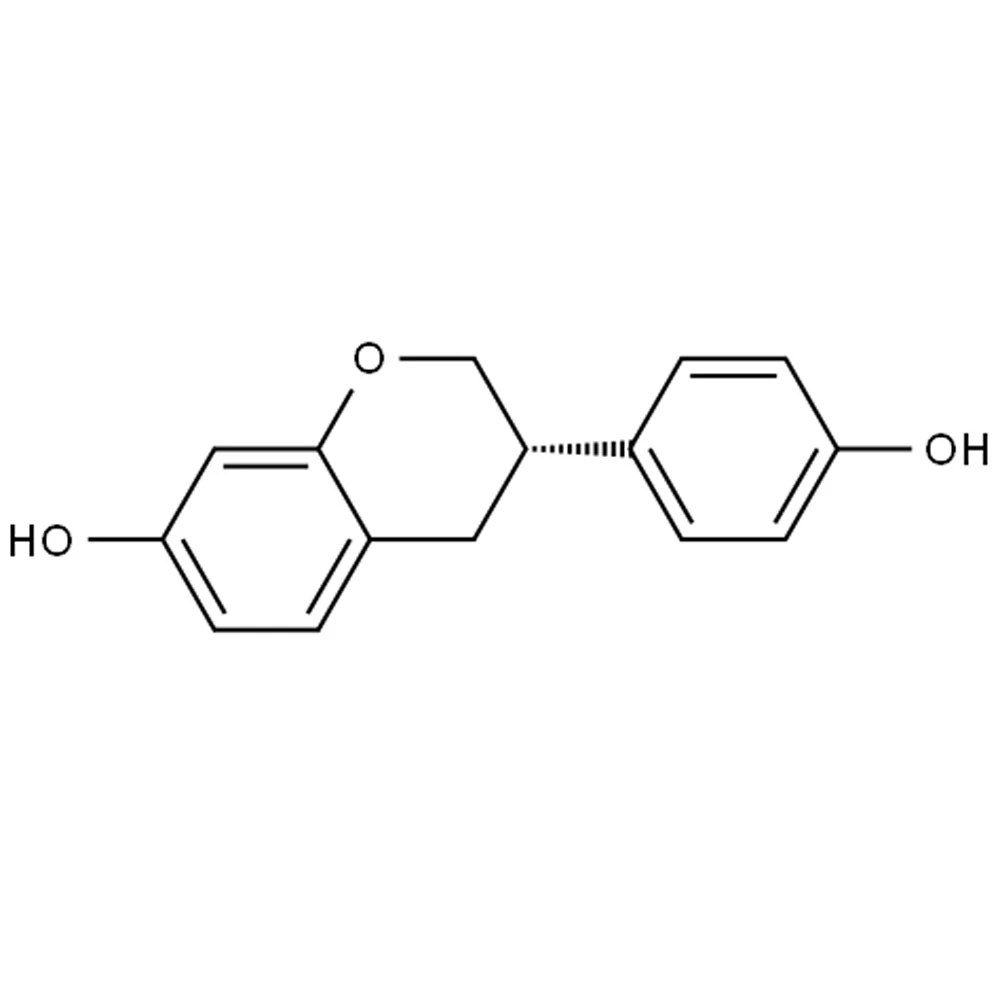
Equol (CAS 531-95-3): Chemical Properties, Stereochemistry, and Research Applications
Key Takeaways
• Equol is a metabolite of the soy isoflavone daidzein and is studied in natural-product, metabolite, analytical, and biological research.
• Equol has a chiral center, making stereochemical form important for research involving S-Equol or other defined forms.
• Key product identifiers include CAS 531-95-3, molecular formula C15H14O3, molecular weight 242.27, and 98% purity.
• Research and procurement teams should confirm identity, purity, stereochemical requirements, storage conditions, and current COA/SDS documentation before ordering.
What Is Equol?
Equol is a metabolite produced from the soy isoflavone daidzein by certain gut bacteria. It is studied for its chemical properties, stereochemistry, estrogen receptor interactions, and role in isoflavone metabolism. The compound is relevant to research involving natural products, metabolites, biologically active molecules, and analytical characterization.
How Is Equol Produced from Daidzein?
Microbial Conversion of Daidzein
Equol is formed through the microbial metabolism of daidzein, a soy isoflavone. Certain gut bacteria can convert daidzein through a series of metabolic transformations that lead to equol. Research on this pathway has helped establish the connection between soy isoflavones, gut microbial activity, and the formation of equol.
The stereochemical outcome is also relevant. Natural microbial production is commonly discussed in connection with S-Equol, which is why research papers often distinguish this form from other stereochemical forms of the molecule.
Isolation and Purification
Once equol has been generated in a biological or production context, it can be separated from the surrounding material and purified for further study. The specific separation and purification approach depends on the source material and the intended research grade. For purchased material, the practical focus is on confirming the identity, stated purity, and documentation of the final product.
Equol and Its Stereochemistry
Stereochemistry describes the three-dimensional arrangement of atoms within a molecule. Two molecules can have the same molecular formula and the same atom-to-atom connectivity while differing in spatial arrangement. When such molecules are non-superimposable mirror images, they are called enantiomers.
Equol contains a chiral center, so its three-dimensional configuration can be important in research. S-Equol is frequently distinguished in scientific discussions because stereochemical form can be relevant when researchers compare molecular interactions, analytical results, or metabolic pathways.
Why the S-form Matters in Research
S-Equol has received particular attention in research on soy isoflavone metabolism and has been investigated in relation to estrogen receptor interactions. These studies examine molecular and biological behavior in defined experimental settings. The findings are useful for understanding the compound, but they do not by themselves establish a human health effect or therapeutic use.
When a project specifically requires S-Equol, the stereochemical specification should be confirmed before material is selected.
Key Chemical and Product Parameters
| Parameter | Value |
| Name | Equol |
| CAS Number | 531-95-3 |
| Molecular Formula | C15H14O3 |
| Molecular Weight | 242.27 |
| Purity | 98% |
| MDL Number | MFCD00200962 |
| Storage | Sealed, cool and dry place |
Why These Parameters Matter for Research and Procurement
The CAS number, molecular formula, and molecular weight are useful for confirming chemical identity across supplier catalogs, internal purchasing records, and laboratory documentation. The MDL number provides another searchable identifier when a project uses a chemical database or an existing material list.
The stated purity is also important because researchers need to know what specification they are ordering. For projects involving stereochemistry, purity alone does not answer whether the required form has been supplied, so the stereochemical requirement should be stated separately when relevant.
Storage information and supplier documentation support the practical side of material management. For Equol, the stated storage condition is a sealed, cool and dry place. A current COA can support material verification, while an SDS provides safety and handling information for the supplied chemical.
Research Applications
Equol appears in research spanning natural products, metabolite studies, analytical chemistry, and investigations of biologically active molecules. The specific research question determines which characteristics receive the most attention, including chemical identity, stereochemistry, purity, and molecular interactions.
Natural-Product and Metabolite Research
Equol is studied as a metabolite associated with the conversion of daidzein, making it relevant to research on soy isoflavones and microbial metabolism. Researchers may examine the pathway from precursor to metabolite, compare different stereochemical forms, or use equol as a defined compound when studying isoflavone-related chemistry.
Analytical Research
Analytical researchers may work with equol when developing or evaluating methods for identifying, characterizing, separating, or quantifying a defined small molecule. In this context, consistent chemical identifiers and an appropriate purity specification help support material selection and comparison across experiments.
Biological Activity and Receptor Research
Equol has been studied for its interactions with estrogen receptors and other aspects of molecular activity. Such work can involve biochemical or cellular research designed to understand how a defined compound behaves in an experimental system. Results from these studies should be interpreted within the conditions and scope of the individual research design.
Sourcing Equol from OUHE
OUHE provides Equol as part of its chemical product catalog for research and industrial purchasing. For teams evaluating equol as a research material, the catalog identifiers provide a convenient starting point for checking the intended compound and preparing a supplier inquiry.
Equol Product Information
The CAS number of OUHE Equol is 531-95-3. It has a molecular formula of C₁₅H₁₄O₃, a molecular weight of 242.27, a purity of 98%, and an MDL number of MFCD00200962.
Where stereochemistry is part of the project requirement, that point can be included in the inquiry as well. This is particularly relevant for research that specifically concerns S-Equol or another defined stereochemical form.
COA, SDS, and Current Specification
OUHE can provide COA and SDS documentation for chemical product inquiries. A COA supports review of the supplied material, while an SDS provides relevant safety and handling information. Researchers and procurement teams can request the current documents needed for their internal purchasing and laboratory records.
The current product specification can also be confirmed before an order is placed. This is useful when a project has specific requirements for identity, purity, stereochemistry, or documentation and the purchasing team needs the latest supplier information.
Packaging, Availability, and International Purchasing Support
Packaging and availability are often part of the purchasing decision for research chemicals. OUHE can provide current packaging options and availability information by inquiry, allowing procurement teams to confirm what is available for the order rather than relying on static assumptions.
OUHE also supports chemical purchasing for research and industrial customers and can assist with international transportation arrangements. Specific packaging, availability, and transportation details should be confirmed directly with OUHE for the intended order.
FAQ
What is Equol used for in research?
Equol is studied in natural-product, metabolite, analytical, and biologically active molecule research. Researchers may examine its formation, stereochemistry, chemical properties, or molecular interactions.
Why is stereochemistry important when evaluating Equol?
Equol has a chiral center, so its three-dimensional form can matter in research. S-Equol may be studied separately from other forms, making stereochemical requirements important when selecting materials.
What information should buyers verify before ordering Equol?
Buyers should verify the product name, CAS number, formula, molecular weight, purity, MDL number, and any stereochemical requirements. COA, SDS, packaging, and availability should also be confirmed.
How should Equol be stored?
Equol should be stored in a sealed, cool, and dry place. Current storage and transportation information should be confirmed with the supplier.
Conclusion
Equol is a defined small molecule associated with daidzein metabolism and research into stereochemistry, analytical chemistry, and biological activity. For research procurement, clear identification, the required stereochemical form, stated purity, storage information, and current supplier documents provide a practical basis for evaluating the material.
Contact OUHE to request the current Equol specification, COA, SDS, packaging options, and availability.