News & Insights
Stay informed with the latest breakthroughs, partnerships, and thought leadership from the chemists leading the future of sustainable materials, pharmaceuticals, and advanced manufacturing.
Nicotinic Acid: Properties, Uses, and Applications
Key Takeaways
- Nicotinic acid is a pyridine carboxylic acid with a wide range of uses in nutrition, pharmaceuticals, animal feed, food-related applications, chemical processing, and research.
- Nicotinic acid is commonly known as niacin and is one of the forms of vitamin B3.
- Its chemical structure also gives it value as a starting material and functional compound in organic and industrial chemistry.
What Is Nicotinic Acid?
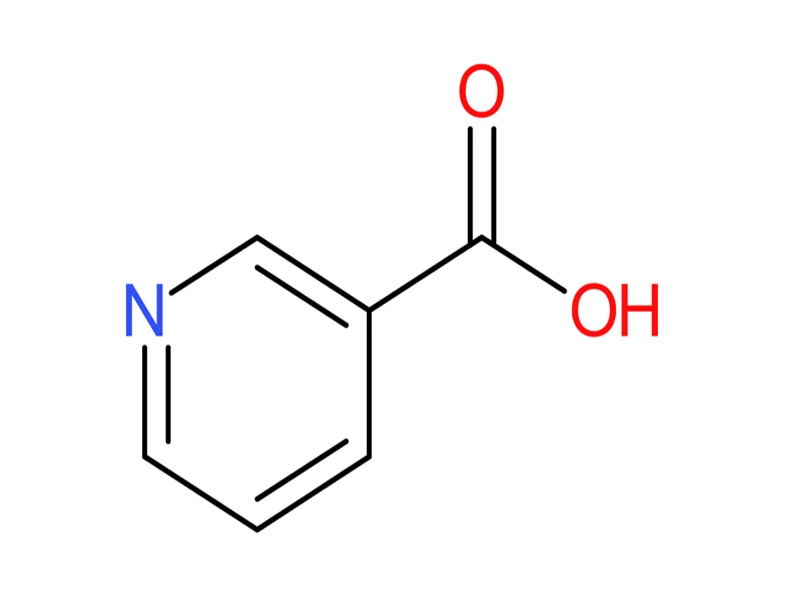
Nicotinic acid is an organic compound belonging to the pyridine carboxylic acid family. Chemically, it is known as pyridine-3-carboxylic acid, because a carboxylic acid group is attached to the third position of a pyridine ring. The compound is also widely known as niacin and is recognized as one of the major forms of vitamin B3.
Nicotinic acid occurs as a white crystalline solid or powder. Its relatively simple molecular structure combines an aromatic nitrogen-containing ring with a carboxylic acid group.This structure supports both its nutritional role and its use in chemical applications, allowing it to serve different roles across research and industry.
For professionals sourcing the material, the exact chemical identity is important because nicotinic acid is closely associated with several names and with nicotinamide, which is a different compound. The distinctions become particularly important when a specification, formulation, or manufacturing process requires a particular chemical form.
Chemical Name, CAS Number, and Molecular Formula
The core identity of nicotinic acid can be summarized as follows:
| Property | Nicotinic Acid |
| Chemical name | Nicotinic acid |
| Systematic name | Pyridine-3-carboxylic acid |
| CAS Number | 59-67-6 |
| Molecular formula | C₆H₅NO₂ |
| Molecular weight | 123.11 g/mol |
| Chemical class | Pyridine carboxylic acid |
| Appearance | White powder / crystalline solid |
Nicotinic Acid, Niacin, and Vitamin B3
These terms are closely related, but they should not be treated as identical in every technical context.
Niacin is the general name commonly used for vitamin B3 and can refer to both nicotinic acid and nicotinamide. Nicotinic acid itself is therefore one specific chemical form of niacin. Nicotinamide, also called niacinamide, has a different functional group even though it belongs to the same vitamin family.
| Term | Chemical identity | Relationship |
| Nicotinic acid | Pyridine-3-carboxylic acid | A specific form of niacin |
| Niacin | General term for vitamin B3 forms | Commonly includes nicotinic acid and nicotinamide |
| Vitamin B3 | Nutritional vitamin group | Includes nicotinic acid and nicotinamide |
| Nicotinamide | Pyridine-3-carboxamide | A different form of vitamin B3 |
This distinction matters for B2B purchasing because a request for “vitamin B3” may not identify the exact chemical material required. The CAS number, chemical name, grade, and intended use should be confirmed before procurement.
What Are the Properties of Nicotinic Acid?
The properties of nicotinic acid come largely from its pyridine ring and carboxylic acid group. Understanding these characteristics helps explain why the compound appears in both formulation-related applications and chemical research.
Molecular Structure
Nicotinic acid is a six-membered aromatic pyridine ring with one nitrogen atom and a carboxylic acid group attached at the 3-position. This gives the compound its systematic name, pyridine-3-carboxylic acid.
The molecular formula is C₆H₅NO₂, with a molecular weight of approximately 123.11 g/mol. The position of the carboxyl group distinguishes nicotinic acid from other pyridine carboxylic acid isomers.
Physical Properties
Nicotinic acid is typically found as a white crystalline solid or powder. Its solid form makes it suitable for routine weighing, blending, and formulation in controlled laboratory or manufacturing environments.
Its physical behavior varies with conditions such as temperature, pH, and solvent. Solubility is particularly relevant when the material is used in liquid formulations or processes where it needs to be dissolved or dispersed.
Chemical Properties
The carboxylic acid group gives nicotinic acid typical acid-base behavior and allows it to form salts and undergo common carboxylic acid reactions. The pyridine nitrogen also contributes to its chemical reactivity and can participate in interactions with other compounds.
Because of these properties, nicotinic acid can be converted into derivatives such as esters and amides. It can also interact with metal ions, which supports its use in areas such as coordination chemistry and related chemical research.
Solubility and Stability
Nicotinic acid has relatively low solubility in water, although its solubility can vary with pH and temperature. It dissolves more readily in alkaline conditions because the carboxylic acid group can become ionized. This behavior is important when nicotinic acid is used in aqueous formulations or chemical processes.
Under normal storage conditions, nicotinic acid is generally stable when protected from excessive heat, moisture, and incompatible materials. For long-term storage, it should be kept in a tightly closed container in a cool, dry place, following the specific storage recommendations provided for the material. Proper storage helps maintain its quality and prevents unnecessary exposure to environmental conditions that could affect the product.
What Is Nicotinic Acid Used For?
Nicotinic acid has applications well beyond its role as a vitamin-related compound. Depending on the grade and intended use, it can be found in pharmaceutical and nutritional products, animal feed, food-related applications, chemical processing, and laboratory research.
Pharmaceutical and Nutraceutical Applications
Nicotinic acid is an established form of vitamin B3 and has long been used in nutritional and pharmaceutical contexts. Its nutritional role is well established, while pharmaceutical applications require close attention to dose, formulation, regulatory requirements, and product grade.
For nutraceutical manufacturers, the key purchasing considerations may include identity, purity, consistency, and documentation. Pharmaceutical applications can require more specific quality controls depending on the finished product and applicable regulations.
Animal Feed Applications
Nicotinic acid is also used in animal nutrition as a source of niacin. Its use in animal feed is recognized at the regulatory level. For example, the European Commission renewed the authorization of nicotinic acid as a nutritional feed additive for all animal species under Regulation (EU) 2024/1194. The regulation identifies nicotinic acid by CAS 59-67-6 and specifies a purity of at least 99% for the authorized feed additive.
For feed manufacturers and ingredient distributors, this makes consistent quality especially important. The required specification should be matched to the regulations and formulation standards of the target market.
Food and Food Ingredient Applications
Nicotinic acid can also be used in food and nutrition-related products as a source of niacin. However, food applications are subject to the requirements of the relevant market, product category, and regulatory framework.
For B2B buyers, the intended application should therefore be established before selecting a material. A chemical intended for laboratory research may have different documentation and specification requirements from an ingredient intended for food or nutritional manufacturing.
Chemical and Industrial Applications
Nicotinic acid also has a broader role in chemical and industrial research. Published research describes its use in areas including electroplating, corrosion control, chemical polishing, silver recovery, chemical imaging, catalysis, and metal-related applications.
Its ability to form derivatives and interact with metals also makes it useful in organic synthesis and coordination chemistry. Researchers have investigated nicotinic acid in the preparation of catalysts and coordination materials, while its carboxylic acid group provides a convenient route to a variety of related compounds.
What Should Buyers Consider When Selecting Nicotinic Acid?
Selecting nicotinic acid for a commercial or research application requires more than checking the product name. The specification should match the intended use, especially when the material will enter a regulated or tightly controlled production process.
Purity and Product Specifications
Purity is one of the first specifications to review. Buyers should confirm the CAS number, purity, molecular formula, and other listed technical parameters to ensure that the material matches the required grade.
Application Requirements
Different industries place different demands on the same chemical. Pharmaceutical and nutraceutical applications may require detailed quality information, while feed and food applications can involve additional regulatory requirements.
Before purchasing, buyers should clarify the intended application, required quantity, acceptable purity, and any market-specific documentation. This makes it easier to determine whether a standard catalog product is suitable.
Packaging and Storage
Packaging should be appropriate for both transportation and subsequent storage. Buyers should also confirm recommended storage conditions, shelf life, and any temperature requirements before placing a larger order.
Quality Documentation
Depending on the application, buyers may need documentation such as a Certificate of Analysis (COA), Safety Data Sheet (SDS/MSDS), and technical specifications.
Why Choose OUHE for Nicotinic Acid?
Product Quality and Specifications
OUHE supplies Nicotinic Acid (CAS 59-67-6) with a listed purity of 99%. The product page provides key specifications, including the molecular formula, molecular weight, appearance, and recommended storage conditions. Buyers can review these details before requesting a quotation.
Supply for Different Order Requirements
OUHE supports chemical supply for different B2B requirements, from research quantities to larger-scale orders. Its stated capabilities cover research, pilot-scale, and industrial-scale requirements, which can be useful for customers whose demand increases from early-stage testing to commercial production.
Custom Synthesis and Technical Support
In addition to catalog chemicals, OUHE provides custom synthesis, process optimization, and scale-up support. These services can be relevant when a standard product specification does not fully match a customer’s research or manufacturing requirements.
International B2B Supply and Logistics
OUHE serves customers in international markets and provides support for export packaging, shipping, and related documentation. For overseas buyers, these services can simplify the process of sourcing chemical products across different markets.
FAQ
Is nicotinic acid the same as vitamin B3?
Nicotinic acid is one of the main forms of vitamin B3 and is commonly called niacin. Nicotinamide is another form of vitamin B3, so the terms should be distinguished when specifying a chemical product.
What is the difference between nicotinic acid and nicotinamide?
Nicotinic acid contains a carboxylic acid group, while nicotinamide contains an amide group. Both are forms of niacin, but they are different chemical compounds with different properties and uses.
What is the CAS number of nicotinic acid?
The CAS number of nicotinic acid is 59-67-6. OUHE lists the same CAS number for its current nicotinic acid product.
How should nicotinic acid be stored?
OUHE currently recommends storing its nicotinic acid product sealed and refrigerated. Buyers should also follow the supplier’s current SDS and product-specific storage instructions.
What should buyers check before purchasing nicotinic acid?
Buyers should verify the CAS number, purity, intended application, packaging, storage requirements, and quality documentation. For larger international orders, lead time, shipping conditions, and export documentation may also need to be confirmed. OUHE advises customers to include the product name, CAS number, and required quantity when requesting a quotation.
Conclusion
Nicotinic acid is a well-established compound with a broad range of applications. Its role as a form of vitamin B3 supports its use in nutritional, pharmaceutical, food, and animal feed products, while its chemical structure also makes it useful in synthesis, catalysis, coordination chemistry, and other technical applications.
For B2B buyers, the appropriate specification depends on the intended application. Confirming chemical identity, purity, documentation, storage conditions, and supply requirements before purchasing helps ensure that the material is suitable for the next stage of production or research.
To request current availability, specifications, documentation, or a quotation for nicotinic acid, buyers can contact OUHE through the product inquiry form.