News & Insights
Stay informed with the latest breakthroughs, partnerships, and thought leadership from the chemists leading the future of sustainable materials, pharmaceuticals, and advanced manufacturing.
Melatonin: From the Pharmacy Shelf to High-Purity Powder
Key Takeaways
- Melatonin is a naturally occurring hormone best known as a sleep supplement on pharmacy shelves.
- The active ingredient in those products starts as a single chemical compound: high-purity melatonin powder.
- Quality differences between suppliers come down to purity, chemical identity, testing, and storage.
- For consumers, dose and timing matter; for buyers, documents such as certificates of analysis matter just as much.
- A reliable supplier shares test results and batch information openly, which protects the final product.
What Most People Know as Melatonin
Ask most people what melatonin is, and they will point to a small bottle in the pharmacy aisle, often near other sleep aids. That is the melatonin most of us meet first: an over-the-counter supplement people take when sleep feels out of reach. It is easy to assume the whole story stops there. In fact, that bottle is the end of a much longer chain, one that begins with a single chemical compound.
Melatonin is a hormone your body makes naturally. A small gland in the brain called the pineal gland releases it as daylight fades, which is why levels climb in the evening and fall again by morning. In simple terms, melatonin tells the body that night has arrived and it is time to wind down. That signal helps many people fall asleep more easily, adjust to new time zones, or manage shift-work schedules.
It is worth clarifying what melatonin is not. It is not a sleeping pill in the classic sense; a pill pushes the brain toward drowsiness, while melatonin simply helps the internal clock line up with bedtime. Because it is a supplement rather than a prescription treatment, people respond differently, and the right choice depends on the individual. Anyone who is pregnant, nursing, taking medication, or managing a medical condition should talk to a healthcare provider first.
The table below shows the forms and doses most shoppers will find, along with typical onset times, so the consumer side of melatonin is easier to picture.
| Form | Typical labeled dose and onset |
| Immediate-release tablet or capsule | 1, 3, 5, or 10 mg; effects usually begin within about an hour |
| Gummy | 1 to 3 mg per piece; easy to chew, similar onset |
| Liquid or drops | Flexible dosing, often 1 to 5 mg per serving |
| Extended-release tablet | 2 mg, designed to release gradually through the night |
For most people, a sensible starting point is a low dose taken roughly 30 to 60 minutes before bed. More is not automatically better; a smaller amount often works just as well with fewer next-day effects.
- Common mild effects: headache, dizziness, daytime drowsiness, or vivid dreams, especially at higher doses.
- Take it at a consistent time; a regular schedule helps more than a bigger dose.
- Avoid driving right after taking it until you know how it affects you.
- Keep it away from children and store the product as the label instructs.
From the Bottle to the Raw Ingredient
Here is the part that surprises most people. The melatonin inside that pharmacy bottle does not grow in a field or appear in a warehouse; it is manufactured as a pure chemical compound and then formulated into tablets, capsules, and gummies. In other words, what a consumer buys is a finished product, and what manufacturers buy is the raw ingredient behind it.
Almost all melatonin on the market today is produced synthetically, which is a practical detail worth knowing. Synthetic melatonin is chemically identical to the hormone the body makes, so the finished product behaves the same way, yet it can be manufactured consistently at scale. Because it is made rather than harvested, quality control becomes the decisive factor: the same molecule can be made well or made poorly, and the difference shows up in purity and testing.
The finished supplement usually contains a small amount of the active compound alongside fillers, binders, and flavoring. The raw ingredient, by contrast, is the compound itself: melatonin powder, tested for purity and identified by its chemical data. Between the two sits a whole supply chain of manufacturers, formulators, and quality checks.
That distinction matters for two different audiences. For a consumer, the question is which brand to trust. For a manufacturer, a researcher, or a buyer, the question moves upstream: where does the high-purity melatonin come from, and how can its quality be verified? The rest of this article focuses on that second question.
What to Look for When Buying High-Purity Melatonin
Whether you are sourcing melatonin for a supplement line, a research project, or a resale catalog, the buying decision comes down to a handful of verifiable details. None of them requires deep chemistry knowledge, and all of them separate a serious supplier from a casual one.
A useful habit is to think like a quality inspector rather than a chemist. You do not need to run the analysis yourself; you need to ask the right questions and check that the answers line up. The three areas below cover purity, identity, and handling, and together they give a clear picture of any melatonin supply.
Check the Purity and the Certificate
Purity is the first number to ask about. The label on a consumer bottle rarely states it, but for the raw ingredient, purity is the single most important quality factor. In the supplement industry, a purity level of 99% purity or higher is the usual standard for high-quality melatonin, and it should always be backed by a certificate of analysis from the batch in question.
That certificate lists what was actually measured, including the assay result, and it should match the number the supplier advertises. Ask for it before you commit. A supplier who sends the certificate without hesitation is showing confidence in the product; one who hesitates deserves a second look.
Verify the Chemical Identity
A high purity number means little if the molecule itself is wrong, so the identity of the compound must be confirmed as well. The standard reference for melatonin is the CAS number 73-31-4, and a trustworthy supplier will state it clearly in the product documentation. Alongside it, you will usually find the molecular formula C13H16N2O2, the molecular weight 232.28, and the chemical name N-acetyl-5-methoxytryptamine.
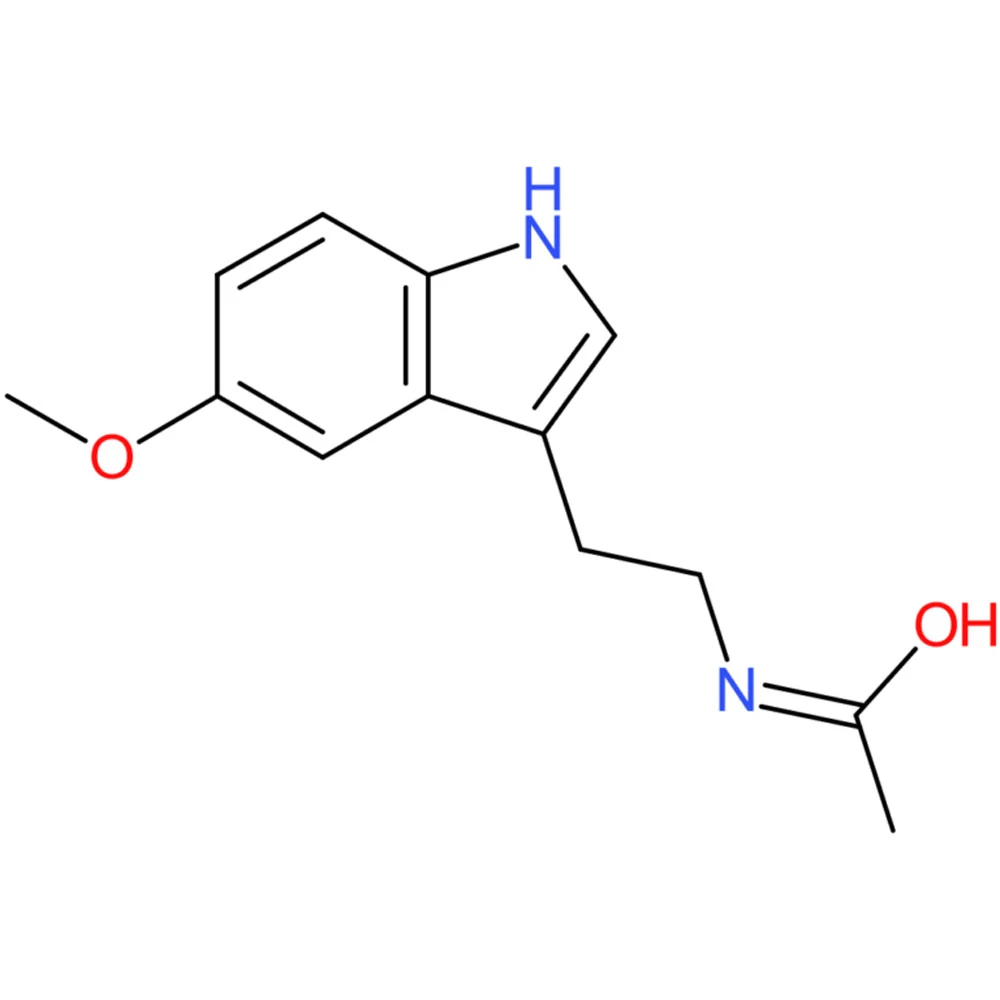
These identifiers allow a buyer to cross-check the product against independent sources, such as a structure drawing or a reference database, before placing an order. If any of these details are missing or vague, the product is harder to verify, and that uncertainty travels all the way down the supply chain.
Storage, Packaging, and Batch Traceability
Melatonin is a delicate compound in one important respect: it responds to heat, light, and moisture. Proper storage keeps it stable, so the handling instructions matter as much as the assay result. Quality suppliers specify sealed, cool storage protected from light, and they package the powder so it survives transit without degradation.
Batch traceability completes the picture. Every batch should carry a lot number that ties it to its certificate of analysis, so you can verify what you received against what was tested. When a buyer can trace the Melatonin from shipment back to its quality documents, the whole transaction becomes transparent, and that transparency is the clearest sign of a dependable source.
Frequently Asked Questions
What is the difference between melatonin supplements and melatonin powder?
Supplements are finished consumer products, such as tablets, gummies, and liquids, that contain melatonin along with other ingredients. Melatonin powder is the raw compound itself, sold as a bulk ingredient to manufacturers, formulators, and researchers. The powder is measured by purity, while the supplement is measured by dose per serving.
How long does melatonin take to work?
For immediate-release forms, effects usually appear within about an hour. Extended-release versions work more gradually through the night. Timing also depends on the individual and on whether the product is taken with food.
What purity should I look for when buying melatonin?
For most commercial and research uses, 99% purity or higher is the expected standard for high-quality melatonin. Always request the certificate of analysis for the specific batch and confirm that the assay result matches the stated purity.
Is it safe to take melatonin every night?
Short-term use is generally well tolerated in the studies published so far, but long-term nightly use is less studied. It is best to treat it as a short-term aid, keep the dose low, and consult a doctor if you plan to take it regularly.
How should melatonin powder be stored?
Keep it sealed, cool, and protected from light and moisture. Reputable suppliers provide storage guidance with the product, and proper handling preserves both stability and shelf life.
Conclusion
For most people, it is a familiar supplement on a pharmacy shelf, a small dose that helps the body settle into sleep. For manufacturers and researchers, it is something else entirely: a pure chemical compound whose quality must be measured, documented, and trusted before it ever becomes a product.
When you buy melatonin powder, the questions that matter are simple to ask and simple to verify. Check the purity, confirm the chemical identity, review the certificate of analysis, and make sure the batch can be traced. A supplier who answers all of those questions openly is worth keeping, because the quality of the powder determines the quality of everything built on top of it.