News & Insights
Stay informed with the latest breakthroughs, partnerships, and thought leadership from the chemists leading the future of sustainable materials, pharmaceuticals, and advanced manufacturing.
Tauroursodeoxycholic Acid Dihydrate (TUDCA): Properties, Research Uses, and Sourcing Guide
Key Takeaways
- Tauroursodeoxycholic acid dihydrate (TUDCA) is the taurine-conjugated form of the bile acid ursodeoxycholic acid (UDCA), best known in research as a chemical chaperone that relieves endoplasmic reticulum (ER) stress.
- Evidence from cell and animal models links TUDCA to reduced apoptosis through mitochondrial protection, which has made it a frequent tool in liver, metabolic, and neurodegenerative research.
- Research-grade TUDCA is typically supplied at 98% purity, with identity parameters such as CAS number, molecular formula, and molecular weight clearly documented.
- Before purchasing, confirm the CAS number, hydration state, purity, and quality-control documentation against the certificate of analysis (COA).
What Is Tauroursodeoxycholic Acid (TUDCA)?
Tauroursodeoxycholic acid dihydrate, commonly abbreviated as TUDCA, is a hydrophilic bile acid used widely in biomedical research. Bile acids are steroid-derived molecules that mammals produce to help digest fats and absorb nutrients. What draws researchers to TUDCA, however, is not its digestive role but its ability to protect cells under stress.
Two features define the molecule chemically. It carries two hydroxyl groups on a steroid skeleton, which makes it far more water-friendly than many bile acids, and its side chain ends in a taurine amide rather than a free carboxylic acid. That single difference, discussed below, changes how the compound behaves in solution and in biological systems.
Commercially, TUDCA is supplied as the dihydrate (C26H45NO6S·2H2O), and this article describes that product. The compound’s chemistry and research uses are identical to those of the parent molecule.
Chemical Name, CAS Number, and Molecular Formula
Table 1. Identity parameters of tauroursodeoxycholic acid dihydrate
| Parameter | Value |
| Chemical name | Tauroursodeoxycholic acid dihydrate |
| Synonyms | Tauroursodeoxycholic acid (TUDCA); 3α,7β-dihydroxy-5β-cholanoyltaurine; ursodeoxycholyltaurine |
| CAS number | 14605-22-2 |
| MDL number | MFCD00069496 |
| Molecular formula | C26H45NO6S |
| Molecular weight | 499.707 |
| Chemical class | Bile acid (taurine-conjugated) |
| Appearance | Typically supplied as a white to off-white crystalline powder |
Because the material is supplied as the dihydrate, including the crystal water gives the formula C26H45NO6S·2H2O and a molecular weight of about 535.74; this mainly matters for moisture content and molarity calculations, so buyers should confirm the hydration state on the COA.
TUDCA, UDCA, and Taurine: How the Names Relate
The names of these compounds cause frequent confusion, and the relationship is actually straightforward. Tauroursodeoxycholic acid is the taurine-conjugated form of ursodeoxycholic acid (UDCA). UDCA is a naturally occurring bile acid; taurine, an amino-sulfonic acid found throughout the body, is attached to the side chain of UDCA to form TUDCA.
The conjugation has practical consequences. Taurine carries a sulfonate group, and its amide linkage makes the resulting molecule more water-soluble and more stable than free UDCA. Both are hydrophilic compared with most bile acids, yet TUDCA is generally considered the more soluble of the two, which matters when preparing stock solutions.
Table 2. TUDCA versus UDCA at a glance
| Aspect | TUDCA | UDCA |
| Full name | Tauroursodeoxycholic acid | Ursodeoxycholic acid |
| Relationship | Taurine-conjugated form of UDCA | Parent bile acid |
| Side chain | Taurine amide | Free carboxylic acid |
| Water solubility | Higher, due to taurine conjugation | Lower |
| Typical research focus | ER stress, apoptosis, neuroprotection | Cholestatic liver disease models, bile acid metabolism |
In short, every molecule of TUDCA is a molecule of UDCA carrying an extra taurine group. That relationship explains why the two are often discussed together and why their biological effects overlap so heavily.
What Are the Properties of TUDCA?
Molecular Structure
TUDCA follows the standard bile acid architecture. The core is a steroid skeleton, specifically the 5β-cholanic acid framework, which consists of four fused rings. Two hydroxyl groups sit at positions 3 and 7 of the skeleton, with the 3α,7β stereochemistry that gives the molecule its characteristic geometry.
The side chain is what sets TUDCA apart from its parent compound. Instead of a free carboxylic acid, the chain carries a taurine group linked through an amide bond. Taurine contributes a sulfonate group at its far end, which is strongly polar. The combination of two hydroxyl groups and the polar side chain gives TUDCA its hydrophilic character: it dissolves more readily in water than hydrophobic bile acids such as lithocholic acid.
This balance, part steroid and part water-loving, is central to how the molecule interacts with cell membranes and proteins in experimental systems.
Physical Properties and Solubility
TUDCA dihydrate is a solid, typically supplied as a white to off-white crystalline powder. Solubility is where most researchers need practical numbers. Catalog data commonly report that TUDCA dissolves in water at roughly 10 to 20 mg/mL at room temperature, with some batches reaching higher values. DMSO solubility is generally excellent, frequently reported around 100 mg/mL, which makes DMSO the usual choice for concentrated stock solutions. Ethanol solubility is moderate, with values commonly reported in the range of 50 to 100 mg/mL.
One practical note: solubility in aqueous buffers can vary with pH and buffer composition, so it is worth confirming solubility in the medium you plan to use.
Stability and Storage
TUDCA dihydrate is moisture-sensitive. Storage is specified at room temperature, in a dry place, and protected from drafts, guidance that reflects how readily the material can gain or lose water. Because the dihydrate contains bound crystal water, humidity can change the water content and therefore the effective molarity of the powder.
Practical storage means keeping the container tightly sealed and away from moisture. Under these conditions, the material is stable for routine laboratory use.
How TUDCA Is Produced
Commercially, TUDCA is made by conjugating ursodeoxycholic acid with taurine: the taurine group attaches to the carboxylic acid of UDCA through an amide bond, producing the molecule researchers work with.
UDCA itself is no longer obtained from natural bile in modern production. Bear bile, its historical source, has been replaced by synthetic routes and by fermentation or biocatalysis approaches that are scalable and animal-free.
Quality control for TUDCA typically includes HPLC analysis to determine purity and to detect related bile-acid impurities, together with measurement of optical rotation, because the compound is chiral and its stereochemistry is part of its identity. Water content analysis, usually by Karl Fischer titration, is also relevant for a hydrated product such as the dihydrate.
How Is TUDCA Used in Research?
TUDCA has become a fixture in cell biology and translational research. The sections below describe the main research directions and the mechanisms that make the compound useful in each.
ER Stress and the Unfolded Protein Response
The endoplasmic reticulum (ER) is the cell’s protein-folding factory. When unfolded or misfolded proteins accumulate inside it, the cell activates a corrective program called the unfolded protein response (UPR). If the stress is severe or prolonged, the UPR shifts from repair to cell death.
TUDCA acts in this pathway as a chemical chaperone. Chaperones are molecules that help proteins adopt their correct three-dimensional shape; a chemical chaperone does this without being a protein itself. By stabilizing protein folding and reducing the load of misfolded proteins, TUDCA lowers ER stress and helps the UPR return to its protective mode.
Mitochondrial Protection and Apoptosis Research
Beyond the ER, TUDCA has well-documented effects on mitochondria and on programmed cell death, or apoptosis. In stressed cells, pro-apoptotic proteins such as Bax move to the mitochondrial membrane, causing release of cytochrome c, which in turn activates caspases, the enzymes that execute cell death.
Studies show that TUDCA interferes at several points in this cascade. It inhibits Bax translocation, reduces cytochrome c release, and dampens caspase activation, effectively raising the threshold for apoptosis. Researchers therefore use TUDCA in cell and animal models of injury, ischemia, and toxicant exposure to test whether blocking these pathways protects tissue, and to map the signaling that connects ER stress to mitochondrial damage.
Liver, Cholestasis, and Metabolic Studies
TUDCA’s parent compound, UDCA, is an approved drug for certain cholestatic liver diseases, and both molecules have a long history in hepatology research. In liver studies, TUDCA is used to investigate bile acid homeostasis, protection of hepatocytes, and the role of ER stress in liver injury.
Metabolic research is a growing area as well. ER stress has been implicated in the dysfunction of insulin-producing cells and in the complications of obesity and diabetes, and TUDCA is frequently used in these models to test whether reducing ER stress improves outcomes. Its ability to stabilize the UPR makes it a standard tool in studies that connect metabolism to cellular stress.
Analytical Reference Standard Use
TUDCA also serves in the analytical laboratory. Bile acid profiling, by HPLC or mass spectrometry, requires reference standards of known identity and purity. Research-grade TUDCA is used in methods that measure bile acids in biological fluids, and its defined purity makes it suitable for calibration and method validation. The same material can serve as an API-related compound in pharmaceutical development.
What Should Buyers Check When Sourcing TUDCA?
Sourcing a research chemical is different from sourcing a commodity. The value lies in the identity and purity of the material, and both are only as good as the documentation behind them.
Confirm Product Identity
The first step is to verify that the material matches the order. The product name, CAS number, hydration state, and purity must agree with the certificate of analysis supplied by the seller. For this product, that means checking that the label reads tauroursodeoxycholic acid dihydrate, that the CAS number is 14605-22-2, and that the purity is 98%. A mismatch between any of these fields and the COA is grounds to question the batch.
Purity and Quality Control Methods
Purity is a number, but the method behind it matters. For research-grade TUDCA, look for an HPLC assay reporting the main-peak purity and, ideally, related bile-acid impurities. Because TUDCA is chiral, specific rotation is a useful identity check, and water content by Karl Fischer titration is important for a dihydrate, since nominal water content affects molarity. Residual solvents and heavy metals should fall within the supplier’s stated limits. Ask for the COA and review it before committing to an order.
Packaging, Documentation, and Lead Time
Research laboratories buy in grams; process development groups buy in kilograms, so make sure the supplier can cover the quantity you need in packaging that suits your use. Documentation is part of the product: you should receive a COA for the batch, an SDS/MSDS for safe handling, and, when needed, a technical data sheet. Confirm lead times and shipping terms in advance, because customs and regulatory paperwork can add days or weeks.
A complete sourcing inquiry should include:
- Product name and CAS number (tauroursodeoxycholic acid dihydrate, 14605-22-2)
- Purity required and preferred assay method, for example 98% by HPLC
- Hydration state to be confirmed on the COA (dihydrate)
- Quantity and packaging preferences
- Documentation needed: COA, SDS/MSDS, and technical data sheet
- Destination country and expected delivery lead time
Sending these details in the first message avoids back-and-forth and lets the supplier quote accurately.
Why Choose OUHE for Tauroursodeoxycholic Acid Dihydrate?
For buyers who need a reliable supply of tauroursodeoxycholic acid dihydrate, OUHE Technology positions itself as a sourcing partner for research chemicals and fine chemicals.
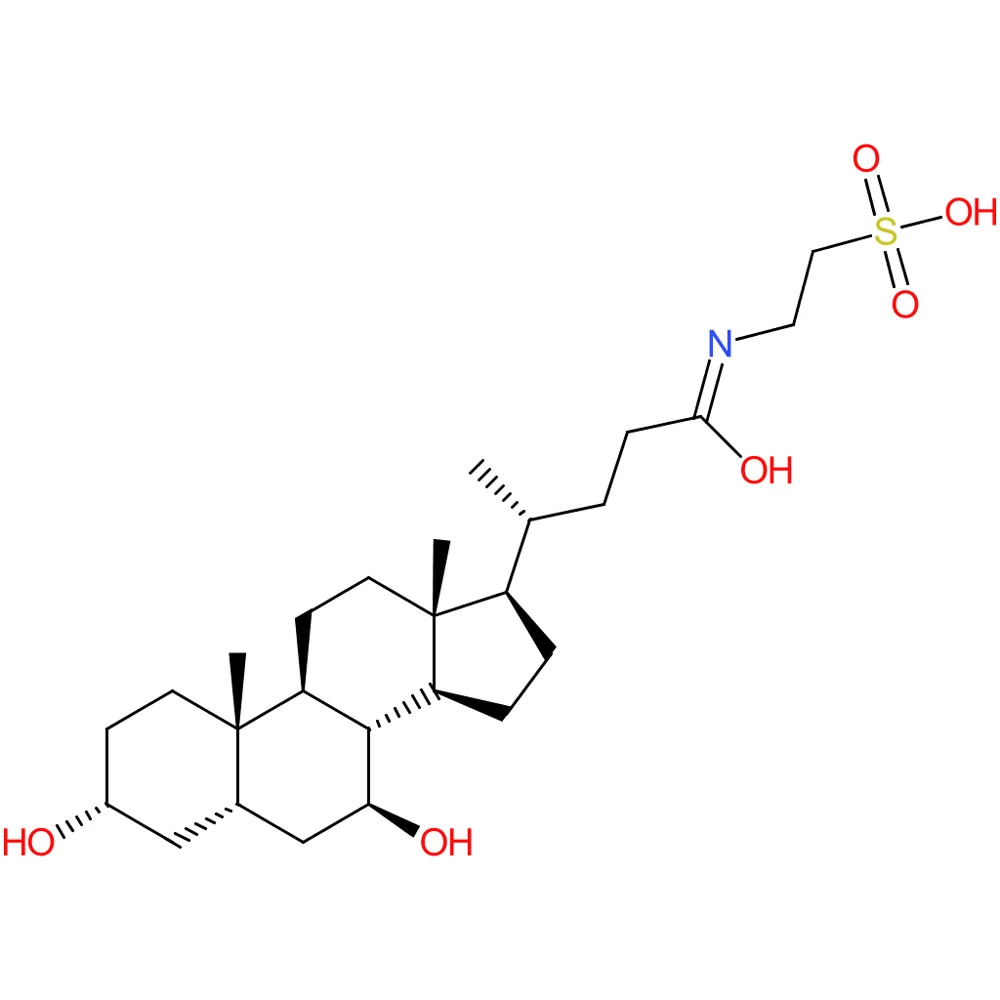
Documented Quality and Parameters
This material ships with a complete identity package: CAS 14605-22-2, MDL number MFCD00069496, product code A28438, molecular formula C26H45NO6S, molecular weight 499.707, and a purity of 98%. Storage guidance is room temperature, dry, and protected from drafts. These figures form the baseline that the delivered COA should match.
Custom Synthesis and Technical Support
Fine-chemicals buyers sometimes need more than a catalog product. OUHE offers custom synthesis for compounds that require adjusted quality targets or nonstandard quantities, and the technical team can answer questions about purity, storage, and handling. For researchers, this support shortens the path from identifying a compound to receiving it.
Export-Compliant Global Delivery and Documentation
International sourcing lives or dies on documentation. OUHE provides the paperwork shipments require, including the COA and SDS/MSDS, and handles export compliance so the material clears customs and reaches the laboratory intact. Confirming documentation requirements at the quotation stage avoids delays.
Frequently Asked Questions
What is TUDCA?
TUDCA, or tauroursodeoxycholic acid, is the taurine-conjugated form of the bile acid ursodeoxycholic acid (UDCA). In research, it is studied as a chemical chaperone that reduces endoplasmic reticulum stress, stabilizes the unfolded protein response, and protects cells from apoptosis. It is supplied as a solid, typically a white to off-white powder.
What is the CAS number of tauroursodeoxycholic acid dihydrate?
For this product, the CAS number is 14605-22-2. Some catalogs list the dihydrate under a separate number, 117609-50-4, so confirm which registry number applies to the material you receive.
How should TUDCA dihydrate be stored?
Store it sealed, at room temperature, and in a dry place, protected from moisture. The dihydrate form can gain or lose water in humid conditions, which changes the effective molarity of the powder. Keep the container tightly closed between uses.
How is TUDCA purity determined?
Purity is typically determined by HPLC, which measures the main peak and can detect related bile-acid impurities. Identity checks include specific rotation, because the compound is chiral, and water content is measured by Karl Fischer titration. The results are reported on the certificate of analysis.
What information should I provide when requesting a quotation?
Include the product name and CAS number, the purity you require, the quantity, packaging preferences, the documentation you need (COA, SDS/MSDS, and technical data sheet), and the destination country. Confirm the hydration state on the COA. With these details, a supplier can respond with an accurate quotation.
Conclusion
Tauroursodeoxycholic acid dihydrate sits at the intersection of bile acid chemistry and cellular stress biology. It is a well-characterized chemical chaperone with documented effects on ER stress, mitochondrial apoptosis, and protein folding, and it appears across liver, metabolic, and neurodegenerative research. For laboratories and procurement teams, the practical questions concern identity, purity, and documentation, all settled by the certificate of analysis. To review current product data, request a COA, or obtain a quotation, contact OUHE through the product inquiry form.