Boronic Esters & Protected Organoboronates
Welcome to OUHE Technology’s catalog of boronic esters and protected organoboronates. We supply high-purity pinacol boronate esters (BPin), MIDA boronates, and neopentyl glycol boronates essential for automated iterative cross-couplings, Miyaura borylations, and C-H functionalizations. Use our advanced search bar to filter by CAS number or product name to secure your target building blocks.
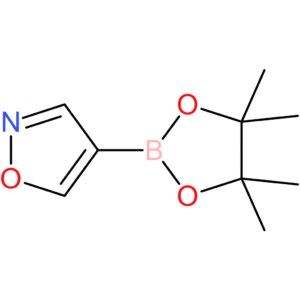
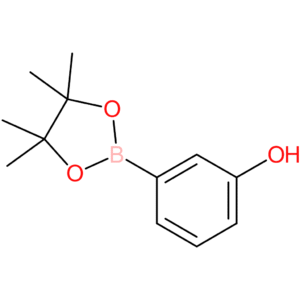
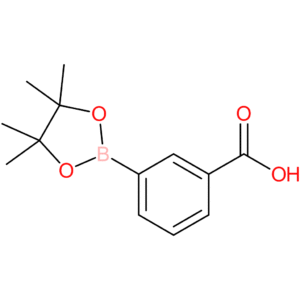
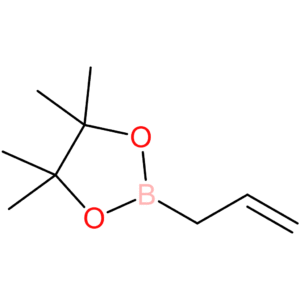
![1,4-Dioxa-spiro[4,5]dec-7-en-8-boronic acid pinacol ester](https://ouhetech.com/wp-content/uploads/2026/06/A15551-300x300.png)
Preserving Stoichiometric Accuracy and Eliminating Boroxine Formation
Unlike free boronic acids, boronate esters do not undergo reversible self-dehydration into cyclic boroxines. This structural stability ensures precise stoichiometry during coupling reactions and significantly improves solubility in non-polar organic solvents. To prevent moisture-induced hydrolysis and decomposition of our high-purity organoboronate building blocks, OUHE Technology packages them under dry nitrogen in moisture-proof containers.
Structural Classes: From Pinacol Esters to Iterative MIDA Boronates
-
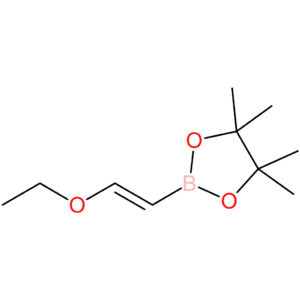
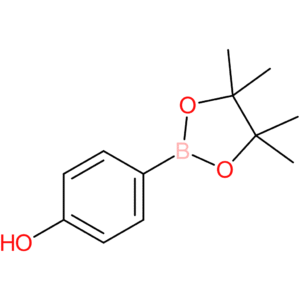
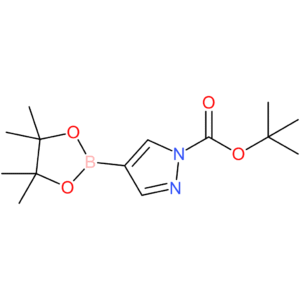
Pinacol Boronate Esters (BPin): Highly stable, non-hygroscopic building blocks prepared via Miyaura borylation or C-H activation, widely used as robust Suzuki partners.
-
MIDA Boronates (Slow-Release): Air-stable sp3 -hybridized boronates designed for automated iterative Suzuki-Miyaura couplings through controlled, basic hydrolysis.
-
Neopentyl Glycol Boronates: Specialty crystalline boronates designed to minimize steric hindrance while maintaining high stability during challenging coupling reactions.
Regioselective Synthesis and Spectroscopic Quality Control
Synthesizing complex organoboronate esters requires precise control over cross-coupling parameters and borylation regioselectivity. We specialize in the custom synthesis of rare boronate esters and protected boron derivatives. Our analytical team verifies chemical specifications using high-resolution GC or HPLC and NMR spectroscopy to guarantee absolute structural and isomeric purity before scale-up.
Frequently Asked Questions
A: MIDA boronates feature an sp3-hybridized boron center that is inert to standard Suzuki coupling conditions. This allows for automated, iterative C-C couplings by sequentially hydrolyzing the MIDA group under mild basic conditions to release the active boronic acid step-by-step.
A: BPin esters do not dehydrate into cyclic boroxines, ensuring precise stoichiometric loading during reactions. They are also significantly more stable, highly soluble in organic solvents, and resistant to protodeboronation compared to free acids.
A: We verify the purity and isomer ratio of boronate esters using high-resolution capillary GC-FID or HPLC. Structural integrity and complete boron-coordination are confirmed via detailed 1H-NMR, 11B-NMR, and MS spectra.