Pyridazine Building Blocks & 1,2-Diazine Synthons
Welcome to OUHE Technology’s catalog of pyridazine building blocks and 1,2-diazine synthons. We supply high-purity halopyridazines, pyridazinone building blocks, and fused pyridazine scaffolds essential for medicinal chemistry, selective cross-couplings, and bioorthogonal applications. Use our advanced search bar to filter by CAS number or product name to secure your target building blocks.
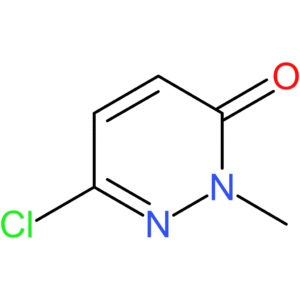
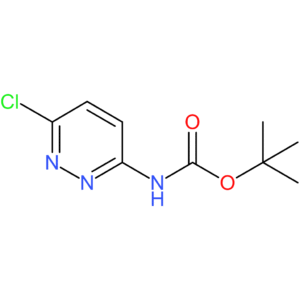
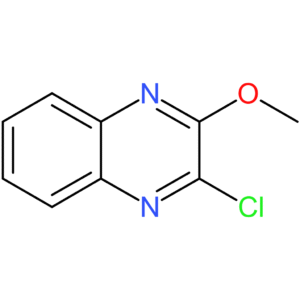
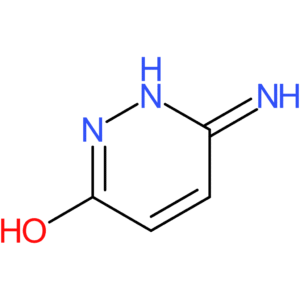
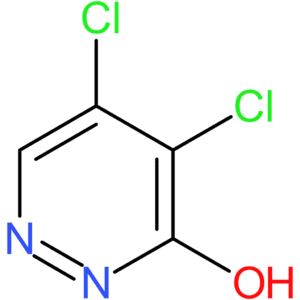
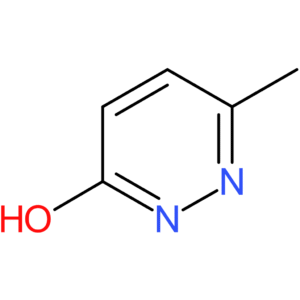
Moisture Protection and Low-Temperature Storage of Labile Diazines
Solid halopyridazines and substituted diazine synthons are highly hygroscopic, easily absorbing atmospheric moisture to form clumps and undergo hydrolytic degradation. At OUHE Technology, we prevent moisture absorption and clumping by packaging our high-purity pyridazine building blocks under dry nitrogen in hermetically sealed containers, preserving active halogen handles for precise stoichiometric control.
Structural Classes: From Desymmetrization Templates to Bioorthogonal Tools
-
Symmetrical Dihalopyridazines (3,6-Dichloropyridazine): Premier templates optimized for regioselective desymmetrization via step-wise nucleophilic substitutions or mono-Suzuki cross-couplings.
-
iEDDA Bioorthogonal Intermediates: High-purity 1,2-diazines and precursors designed for inverse electron-demand Diels-Alder (iEDDA) cycloadditions in chemical biology and imaging.
-
Pyridazinone Building Blocks: Functionalized oxo-diazine scaffolds serving as privileged motifs for constructing cardiovascular and central nervous system (CNS) active APIs.
Regioselective Synthesis and Spectroscopic Quality Control
The electron-deficient nature of the 1,2-diazine ring makes electrophilic substitution difficult, necessitating precise ring-closing condensations. We specialize in the custom synthesis of regiochemically pure pyridazine derivatives with high isomeric purity. Our analytical team verifies chemical specifications using high-resolution GC or HPLC and NMR spectroscopy to ensure absolute structural and isomeric purity.
Frequently Asked Questions
A: The halogen atoms on 3,6-dichloropyridazine intermediates are highly reactive. By carefully controlling reaction temperature (typically low temperature) and stoichiometry (1:1 ratio), we can achieve highly selective mono-nucleophilic aromatic substitution or mono-Suzuki couplings, enabling unsymmetrical diaryl functionalization.
A: Pyidazines are formed as the final stable product of the classic iEDDA reaction between tetrazines and strained alkenes (like trans-cyclooctene / TCO). This click reaction is exceptionally fast and highly selective, making it a premier bioorthogonal tool in chemical biology.
A: Positional isomers of pyridazine can have very similar physical constants. We verify precise substitution positions (e.g., 3- vs. 4-position) using high-resolution HPLC or capillary GC and confirm structure via 1H-NMR and 13C-NMR spectra through our university partnerships.