Indole Building Blocks & Heterocyclic Synthons
Welcome to OUHE Technology’s catalog of indole building blocks and heterocyclic synthons. We supply high-purity haloindoles, indoleboronic acids, and N-protected indole derivatives essential for transition metal-catalyzed couplings, regioselective C-3 functionalizations, and drug discovery workflows. Use our advanced search bar to filter by CAS number or product name to secure your target building blocks.
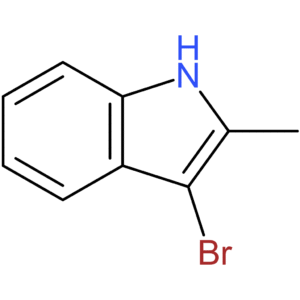
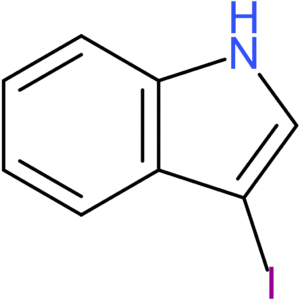
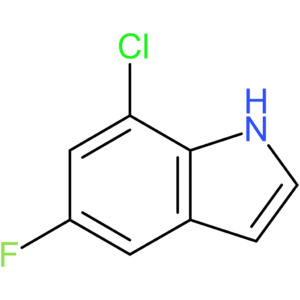
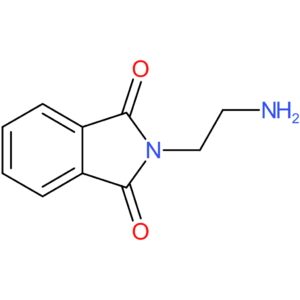
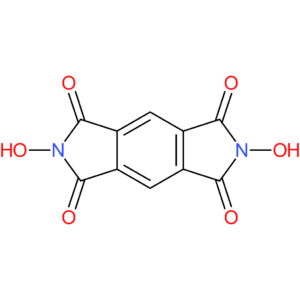
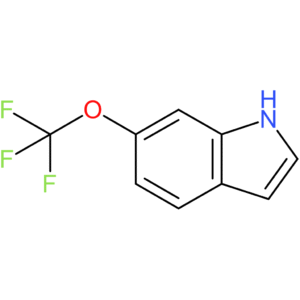
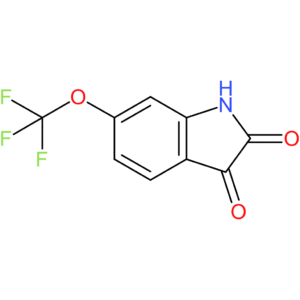
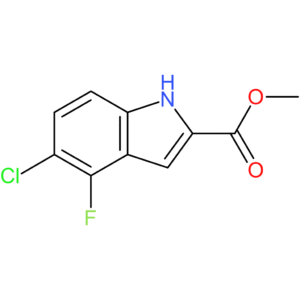
High C-3 Electrophilic Reactivity and Air-Sensitive Discoloration Controls
The electron-rich fused pyrrole-benzene ring of indole undergoes electrophilic aromatic substitution (EAS) with exceptional selectivity at the C-3 position. However, these highly reactive scaffolds are prone to light- and air-oxidation, turning pink or dark brown over time. At OUHE Technology, we prevent photochemical degradation and oxidation by storing our high-purity indole building blocks under dry nitrogen in light-shielded, hermetically sealed containers.
Structural Classes: From Cross-Coupling Partners to Protected Synthons
-
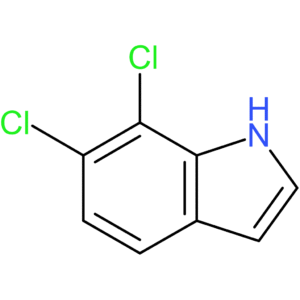
Haloindoles (4-, 5-, 6-, 7-Halogenated): High-purity halogenated building blocks optimized as robust partners for transition metal-catalyzed Suzuki-Miyaura and Buchwald-Hartwig couplings.
-
Indoleboronic Acids & Esters: Boronated intermediates (including pinacol esters) serving as stable nucleophilic partners in classic Suzuki-Miyaura cross-couplings.
-
N-Protected Indoles (Boc, Cbz, Trityl): Pre-configured synthons utilizing weak N-H acidity (pKa≈16.2) to mask nitrogen nucleophilicity, ensuring regioselective functionalization of the ring.
Regioselective C-H Functionalization and Spectroscopic Quality Control
Functionalizing specific carbons on the indole ring requires precise control over competitive C-H activations and orthometalation. We specialize in the custom synthesis of regiochemically pure indole derivatives, resolving close-running positional isomers. Our analytical team verifies chemical specifications using high-resolution GC or HPLC and NMR spectroscopy to guarantee absolute structural and isomeric purity before scale-up.
Frequently Asked Questions
A: Electrophilic attack at the C-3 position is thermodynamically favored because the resulting transition-state carbocation preserves the highly stable aromatic resonance energy of the fused benzene ring, whereas attack at C-2 disrupts it.
A: Unprotected indole nitrogen possesses a weakly acidic N-H (pKa ~16.2) and a nucleophilic lone pair that can coordinate with transition-metal catalysts (like Pd or Ni), causing catalyst deactivation. Using N-protected indole building blocks masks this active site, ensuring clean couplings.
A: Indole positional isomers (e.g., 5-halo vs. 6-halo indoles) have nearly identical physical properties. We resolve these close-running isomers using high-resolution capillary GC or HPLC and confirm the exact regiochemistry via detailed 1H-NMR, 13C-NMR, and MS spectra.