Transition Metal Catalysts & Phosphine Ligands
Welcome to OUHE Technology’s catalog of transition metal catalysts and phosphine ligands. We supply high-purity palladium catalysts, bidentate phosphines, and chiral ligands optimized for Suzuki-Miyaura couplings, Buchwald-Hartwig aminations, and asymmetric syntheses. Use our advanced search bar to filter by CAS number or product name to locate your target reagents.
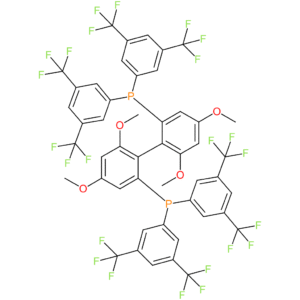
(2-dicyclohexylphosphinophenyl)methane](https://ouhetech.com/wp-content/uploads/2026/06/A38520-300x300.png)
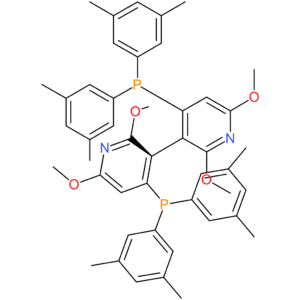
Stabilizing Low-Valent Active Metals and Preventing Phosphine Oxidation
Transition metal catalysis relies on coordinating active low-valent metal species (such as Pd(0) or Ni(0)) with electron-rich ligands. However, trivalent organophosphines are highly sensitive to oxygen, easily oxidizing into inactive phosphine oxides. At OUHE Technology, we protect our reactive phosphine ligands and moisture-sensitive metal complexes by packaging them under dry nitrogen in hermetically sealed, light-protected containers.
Structural Classes: From Cross-Coupling to Chiral Resolution
-
Organometallic Complexes: High-activity palladium, nickel, and ruthenium catalysts optimized for Suzuki, Heck, and C-H activation reactions.
-
Bidentate Phosphine Ligands (dppf, BINAP): Electron-rich chelating ligands designed to stabilize transition metals and promote challenging Buchwald-Hartwig aminations.
-
Chiral Ligands & Scaffolds: Specialized asymmetric ligands (including chiral phosphines and oxazoline-based PyBOX ligands) designed to achieve high enantiomeric excess (% ee) control.
Chiral HPLC Verification, Stoichiometric Precision, and Custom Synthesis
Asymmetric reactions require absolute enantiomeric purity and precise ligand-to-metal stoichiometry. We utilize chiral HPLC and NMR spectroscopy to verify the optical purity and enantiomeric excess (% ee) of our chiral ligands. Through our state-of-the-art laboratory, we offer specialized custom synthesis of novel ligands and catalysts tailored to your proprietary catalytic systems, scaled from milligrams to kilograms.
Frequently Asked Questions
A: Trivalent phosphines easily oxidize to inactive phosphine oxides (P=O). We package our air-sensitive catalysts and ligands under a dry nitrogen blanket in hermetically sealed amber glass or steel containers. We recommend cold, inert-gas storage.
A: We measure chiral purity and enantiomeric excess (% ee) using high-resolution chiral HPLC with polysaccharide-based columns. We also provide complete 1H-NMR, 13C-NMR, and 31P-NMR spectra to confirm structural and coordination purity.
A: Yes. Beyond supplying free ligands, we specialize in the custom synthesis and stoichiometric preparation of pre-coordinated transition metal complexes (such as Pd, Ni, or Ru catalysts). We scale these specialized catalysts from milligrams to pilot batches under strict confidentiality.