Pyridazine Fine Chemicals & Diazine Intermediates
Welcome to OUHE Technology’s catalog of pyridazine fine chemicals and diazine intermediates. We supply high-purity halopyridazines, substituted pyridazinones, and fused pyridazine scaffolds essential for pharmaceutical drug discovery, agrochemical formulations, and specialty ligand synthesis. Use our advanced search bar to filter by CAS number or product name to secure your target intermediates.
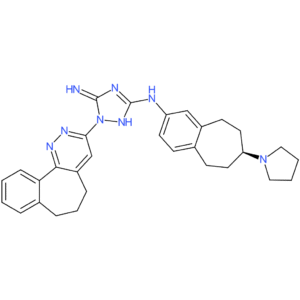
Managing the Electron-Deficient Reactivity of 1,2-Diazines
The 1,2-diazine ring of pyridazine is highly electron-deficient due to its adjacent nitrogen atoms. While electrophilic substitution is difficult, nucleophilic aromatic substitution (NAS) is highly favored, making halogenated derivatives excellent synthetic handles. To prevent moisture-induced clumping and slow oxidation of our high-purity reactive halopyridazines, OUHE Technology packages these compounds under dry nitrogen in moisture-proof, hermetically sealed containers.
Structural Classes: From Halopyridazines to Pyridazinones
-
Halopyridazines (3,6-Dichloropyridazine): Premier di-halogenated building blocks optimized as versatile starting materials for symmetric or unsymmetric diaryl-pyridazine APIs.
-
Substituted Pyridazinones: Crucial oxo-containing heterocycles widely utilized as core pharmacophores in anti-inflammatory and cardiovascular drug candidates.
-
Benzopyridazines (Phthalazines): Fused heterocyclic scaffolds designed for specialized transition metal coordination chemistry and advanced agricultural fungicides.
Hydrazine Condensation Chemistry and Chromatographic Purity
Constructing the pyridazine core typically involves condensing 1,4-dicarbonyl compounds with hydrazine, which can yield isomeric impurities. We specialize in synthesizing regioselectively functionalized pyridazine scaffolds with high isomeric purity. Our analytical team verifies chemical parameters using high-resolution HPLC or GC and NMR spectroscopy to guarantee absolute structural and isomeric purity before scaling.
Frequently Asked Questions
A: The adjacent nitrogen atoms in pyridazine lower lipophilicity and improve aqueous solubility and metabolic stability compared to benzene or pyridine rings, making it an excellent bioisostere to modulate pharmacokinetic profiles.
A: Pyridazine isomers have very similar boiling and melting points. We verify precise substitution positions using high-resolution HPLC or capillary GC and provide complete NMR (1H and 13C) and MS spectra for structural confirmation.
A: Yes. The di-halogenated 3,6-dichloropyridazine intermediates are highly reactive. By controlling stoichiometry, temperature, and base catalysts, they undergo highly selective mono-nucleophilic substitution or Suzuki couplings, allowing for unsymmetrical functionalization.