Pyrimidine Building Blocks & 1,3-Diazine Synthons
Welcome to OUHE Technology’s catalog of pyrimidine building blocks and 1,3-diazine synthons. We supply high-purity halopyrimidines, pyrimidineboronic acids, and aminopyrimidine derivatives essential for multi-step organic transformations, sequential cross-couplings, and kinase inhibitor drug discovery. Use our advanced search bar to filter by CAS number or product name to secure your target building blocks.
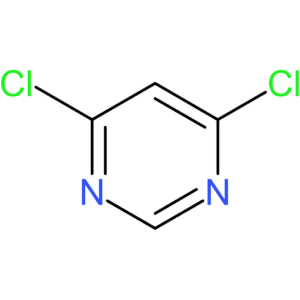
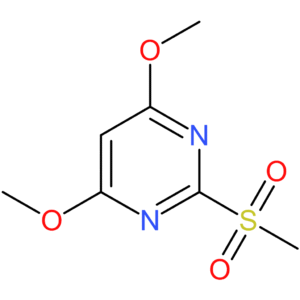
Moisture Protection and Low-Temperature Storage of Labile Diazines
Solid chloropyrimidines and many substituted diazine synthons are highly hygroscopic, easily absorbing atmospheric moisture and undergoing hydrolytic degradation. At OUHE Technology, we prevent moisture absorption and clumping by packaging our high-purity pyrimidine building blocks under dry nitrogen in hermetically sealed, moisture-proof containers, preserving active halogen and boronic handles for precise stoichiometric control.
Structural Classes: From Multi-Halides to Boronic Coupling Synthons
-
Multi-Halopyrimidines (2,4,6-Trichloropyrimidine): Symmetrical or unsymmetrical templates optimized for selective step-wise nucleophilic aromatic substitutions (NAS).
-
Pyrimidineboronic Acids & Esters: High-purity boronated intermediates serving as robust nucleophilic partners in classic Suzuki-Miyaura cross-couplings.
-
Aminopyrimidines & Uracil Synthons: Nitrogen-rich building blocks pre-configured to introduce pharmacophore motifs in antiviral and oncology drug candidates.
Ring Regioselectivity and High-Resolution Isomeric Quality Control
The two nitrogen atoms in 1,3-diazine strongly deactivate the ring toward electrophilic attacks, while highly activating the C-2, C-4, and C-6 positions for nucleophilic attacks. We specialize in the custom synthesis of regiochemically pure pyrimidine derivatives, resolving close-running positional isomers. Our analytical team verifies chemical specifications using high-resolution GC or HPLC and NMR spectroscopy to guarantee absolute structural and isomeric purity.
Frequently Asked Questions
A: The three chlorine atoms on 2,4,6-trichloropyrimidine intermediates have temperature-dependent reactivities. By carefully controlling reaction temperature (e.g., 0°C, room temperature, and refluxing) and stoichiometry, you can achieve highly selective sequential substitutions with different nucleophiles to build unsymmetrical pyrimidines.
A: Unlike C-2, C-4, and C-6, the C-5 position cannot stabilize the negative charge of the intermediate Meisenheimer complex onto the electronegative nitrogen atoms, making C-5 highly resistant to nucleophilic aromatic substitution (NAS) but relatively reactive toward electrophilic attacks if activated.
A: Positional isomers of pyrimidines can have identical physical properties. We verify precise substitution positions using high-resolution capillary GC or HPLC and confirm the exact regiochemistry via detailed 1H-NMR, 13C-NMR, and MS spectra through our university partnerships.