Five-Membered Nitrogen Heterocycles & Diazoles
Welcome to OUHE Technology’s catalog of five-membered nitrogen heterocycles and diazoles. We supply high-purity pyrroles, imidazoles, pyrazoles, and triazole derivatives essential for pharmaceutical APIs, agricultural fungicides, and specialty ionic liquids. Use our advanced search bar to filter by CAS number or product name to secure your target intermediates.
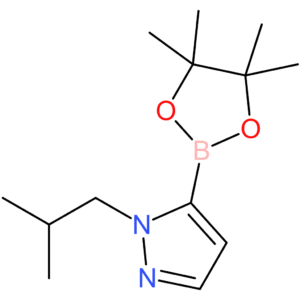
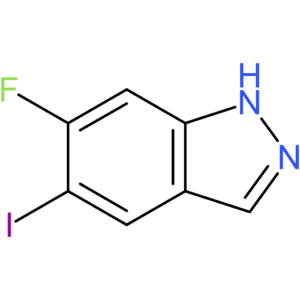
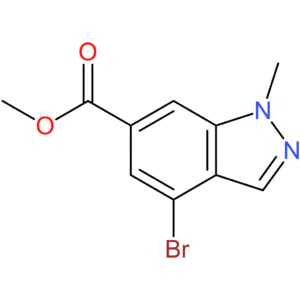
![3-Pyrrolidinol, 5-[[bis(4-methoxyphenyl)phenylmethoxy]methyl]-,(3R,5S)-](https://ouhetech.com/wp-content/uploads/2026/06/A20618-300x300.png)
![1-(2-Ethoxyethyl)-2-(piperidin-4-yl)-1H-benzo[d]imidazole hydrochloride](https://ouhetech.com/wp-content/uploads/2026/06/A20818-300x300.png)
![3-Amino-6,6-dimethyl-4,6-dihydro-pyrrolo[3,4-c]pyrazole-1,5-dicarboxylic acid 5-tert-butyl ester 1-ethyl ester](https://ouhetech.com/wp-content/uploads/2026/06/A20764-300x300.png)
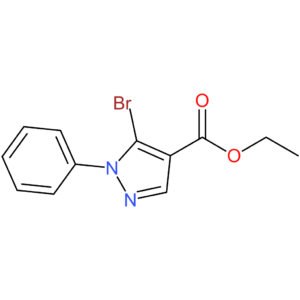
![2-((4-Methoxy-3-methylpyridin-2-yl)methylthio)-1H-benzo[d]imidazole](https://ouhetech.com/wp-content/uploads/2026/06/A20729-300x300.png)
![2-Chloro-7-cyclopentyl-N,N-dimethyl-7H-pyrrolo[2,3-d]pyrimidine-6-carboxamide](https://ouhetech.com/wp-content/uploads/2026/06/A20525-300x300.png)
Managing Air-Sensitivity and Polypyrrole Polymerization in Pyrroles
The electron-rich, π-excessive aromatic ring of pyrroles is highly susceptible to atmospheric oxidation, readily polymerizing into dark oligomers and polypyrrole precipitates. At OUHE Technology, we prevent this air-sensitive oxidation and polymerization of our reactive pyrrole monomers by packaging them under dry nitrogen in light-shielded, hermetically sealed containers, preserving long-term chemical reactivity.
Amphoteric Imidazoles, Pyrazoles, and Triazoles as API Pharmacophores
-
Imidazoles & Benzimidazoles: Amphoteric rings featuring both basic and acidic nitrogens, widely used in anti-fungal APIs, ionic liquids, and metal-organic frameworks (MOFs).
-
Pyrazoles & Indazoles: Key 1,2-diazole building blocks optimized for the selective synthesis of non-steroidal anti-inflammatory drugs (NSAIDs) and targeted kinase inhibitors.
-
Triazoles & Tetrazoles: Highly stable scaffolds constructed via Click chemistry or used as carboxylic acid bioisosteres in angiotensin II receptor blockers (sartans).
Regioselective N-Alkylation and Spectroscopic Quality Control
Functionalizing five-membered azole rings requires precise control over tautomeric equilibria and N-H regioselectivity. We specialize in the regioselective N-alkylation of pyrazoles and triazoles, using optimized base and temperature conditions. Every batch is verified using high-resolution GC or HPLC and NMR spectroscopy through our academic partnerships to confirm exact substitution patterns and isomeric purity.
Frequently Asked Questions
A: Pyrroles are highly electron-rich and easily oxidize to form dark polymeric impurities. We pack our air-sensitive pyrroles under inert nitrogen in light-proof amber bottles or steel drums, and recommend storing them below 4°C.
A: Azole N-alkylation often yields mixtures of N1 and N2/N3 isomers. We resolve and measure these isomer ratios using high-resolution capillary GC or HPLC and confirm the exact regiochemistry via high-field 1H-NMR and 13C-NMR spectroscopy.
A: Yes. Our high-purity tetrazoles (typically ≥98%) possess similar acidity and charge distribution to carboxylic acids but have improved metabolic stability and lipophilicity. We supply these intermediates in custom-packaged, multi-kilogram batches.