Pyrimidine Fine Chemicals & Nucleoside Intermediates
Welcome to OUHE Technology’s catalog of pyrimidine fine chemicals and nucleoside intermediates. We supply high-purity halopyrimidines, aminopyrimidines, and pyrimidinecarboxylic acids essential for antiviral drugs, oncology APIs, and agricultural fungicides. Use our advanced search bar to filter by CAS number or product name to secure your target intermediates.
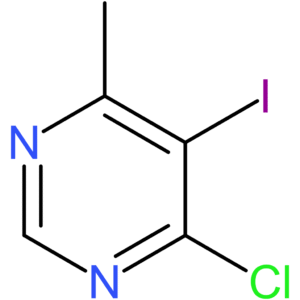
![Ehyl 3-bromopyrazolo[1,5-a]pyrimidine-2-carboxylate](https://ouhetech.com/wp-content/uploads/2026/06/A14549-300x300.png)
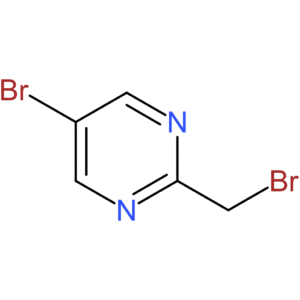
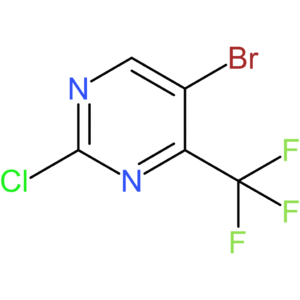
![7-Bromo-2,4-dichloro-thieno[3,2-d]pyrimidine](https://ouhetech.com/wp-content/uploads/2026/06/A14534-300x300.png)
![Ethyl 5,7-dichloropyrazolo[1,5-a]pyrimidine-3-carboxylate](https://ouhetech.com/wp-content/uploads/2026/06/A14530-300x300.png)
![4-Chloro-7-((2-(trimethylsilyl)ethoxy)methyl)-7H-pyrrolo[2,3-d]pyrimidine](https://ouhetech.com/wp-content/uploads/2026/06/A14525-300x300.png)
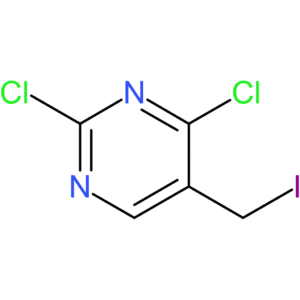
![2,4-Dichloro-7-tosyl-7H-pyrrolo[2,3-d]pyrimidine](https://ouhetech.com/wp-content/uploads/2026/06/A14522-300x300.png)
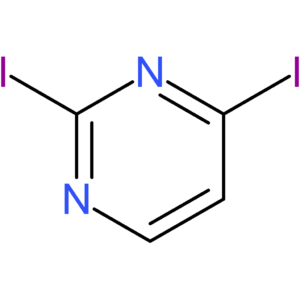
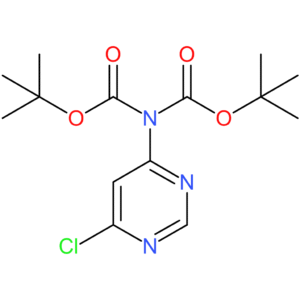
![6-Bromo-2,4-dichloro-3H-pyrrolo[2,3-d]pyrimidine](https://ouhetech.com/wp-content/uploads/2026/06/A14482-300x300.png)
Managing the Electron-Deficient Reactivity of 1,3-Diazines
The 1,3-diazine ring of pyrimidine is extremely electron-deficient, heavily deactivating the ring toward electrophilic attacks while highly activating the 2-, 4-, and 6-positions for nucleophilic aromatic substitutions (NAS). However, many chloropyrimidines are highly hygroscopic and prone to hydrolytic decomposition. At OUHE Technology, we prevent moisture-induced degradation and clumping of our reactive halopyrimidines by packaging them under dry nitrogen in hermetically sealed, moisture-proof containers.
Structural Classes: From Halopyrimidines to Nucleic Acid Bases
-
Halopyrimidines (2,4,6-Trichloropyrimidine): Highly reactive electrophilic intermediates utilized as core coupling templates to build complex oncology and kinase inhibitor APIs.
-
Aminopyrimidines & Uracil Derivatives: Modified nucleobases and amine-functionalized scaffolds designed for anti-viral nucleoside analogs and enzyme inhibitors.
-
Fused Pyrimidines (Purines & Quinazolines): Fused heterocyclic systems serving as privileged drug design templates and highly selective agricultural fungicides.
Amidine Condensations and High-Resolution Isomeric Purity
Synthesis of pyrimidines classically involves condensing amidines, guanidines, or ureas with 1,3-dicarbonyl compounds. This ring-closing reaction can yield regioisomers. We specialize in the custom synthesis of regiochemically pure pyrimidine scaffolds, using optimized conditions to eliminate isomers. Our analytical team verifies chemical parameters using high-resolution HPLC or GC and NMR spectroscopy to guarantee absolute structural and isomeric purity.
Frequently Asked Questions
A: The two nitrogen atoms in 1,3-diazine strongly withdraw electron density, making the C-2, C-4, and C-6 positions highly electrophilic and susceptible to nucleophilic aromatic substitution (NAS), whereas the C-5 position remains relatively unreactive.
A: Positional isomers of pyrimidine can be difficult to resolve. We verify precise substitution positions using high-resolution HPLC or capillary GC and provide complete NMR (1H and 13C) and MS spectra for absolute structural confirmation.
A: Yes. The chlorine atoms on 2,4,6-trichloropyrimidine have different reactivities based on temperature. By controlling reaction temperature (e.g., 0°C vs. room temperature vs. reflux), we can achieve highly selective step-wise nucleophilic substitutions with different nucleophiles.